

Our Historic Venues
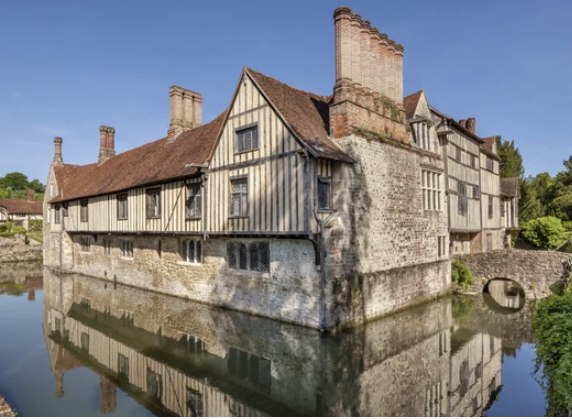
Ightham Mote
Ightham Mote, Mote Road, Ivy Hatch, TN15 0NT
Ightham Mote is a medieval moated Manor House dating from the 14th Century. The earliest recorded owner was Sir Thomas Carne and through marriage was owned by generations of the Haute family – one owner being Sir William Haute who composed music. In 1581, Sir William Selby bought the estate and it remained in the Selby family for nearly 300 years. In the Nineteenth Century, the house became a centre for the artists and writers of the Aesthetic Movement including John Singer Sargent – who painted the house and some its guests. In the Twentieth Century, the house belonged to the Colyer Fergusson family eventually being auctioned after the Second World War and nearly demolished. Prior to becoming a National Trust property, the house and gardens were rescued by the American, Henry Robinson. Ightham Mote has many of its original features dating back to 1320 and has 70 rooms arranged around a central courtyard. The house is surrounded on all sides by a moat crossed by three bridges. Pevsner described Ightham Mote as “the most complete small medieval Manor House in the county.”
Website
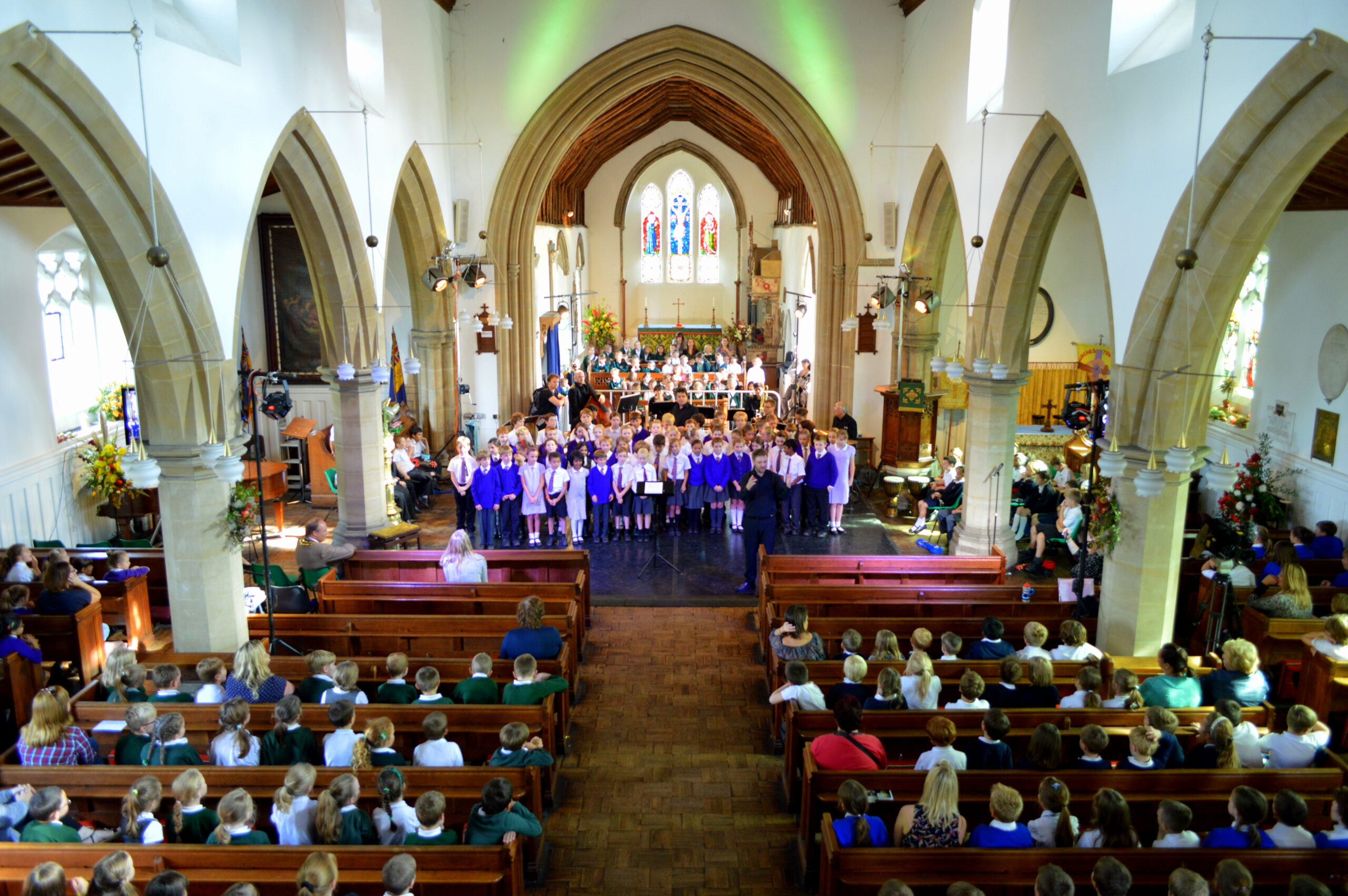
St Mary’s Church, West Malling
138 High St, West Malling ME19 6NE
St Mary’s Church has been a place of worship for a thousand years. Probably there was a Saxon church, for in 945 AD King Edmund gave the parish to Buhric, Bishop of Rochester, which is why we have the ancient street called King Hill – the origin for the name of the new village Kings Hill.
After the conquest in the 11th Centruey William the Conqueror made his architect, Gundulf, the new Bishop. Gundulf built a new church, evidence of which can be seen today, as well as the Abbey and St Leonard’s Tower.
In 1712, according to the vestry book, “there happened a terrible and great tempest of thunder and lightning and set afire the spire of the church, which broke down through the roof and ceiling of the body of the church and went through the head of the chancel.” For decades, the church gradually decayed until in 1778 it had to be rebuilt after the roof of the nave collapsed leaving only the chancel and the tower standing at either end. This led to the old Kentish saying: “Proud Town Malling, poor people. Built a churchto their steeple.”
The church’s bells have been ringing for at least 350 years –- the five oldest date from the mid 1600s. The porch and pews were financed by selling ‘the Malling Stoop’ in 1903 –- an Elizabethan Fulham-Delft stoneware jug splashed with purple, orange and green and enclosed in silver gilt straps. Made in 1581, it fetched 1,450 guineas, a large sum 100 years ago. It is now in the British Museum. However, the church has managed to save another rare artefact: the royal coat-of-arms on the organ loft. Carved in wood, it depicts the armorial bearings of the House of Stuart with the cipher of James II. Beneath it is the motto: “Fear God, Honour the King”.
Website
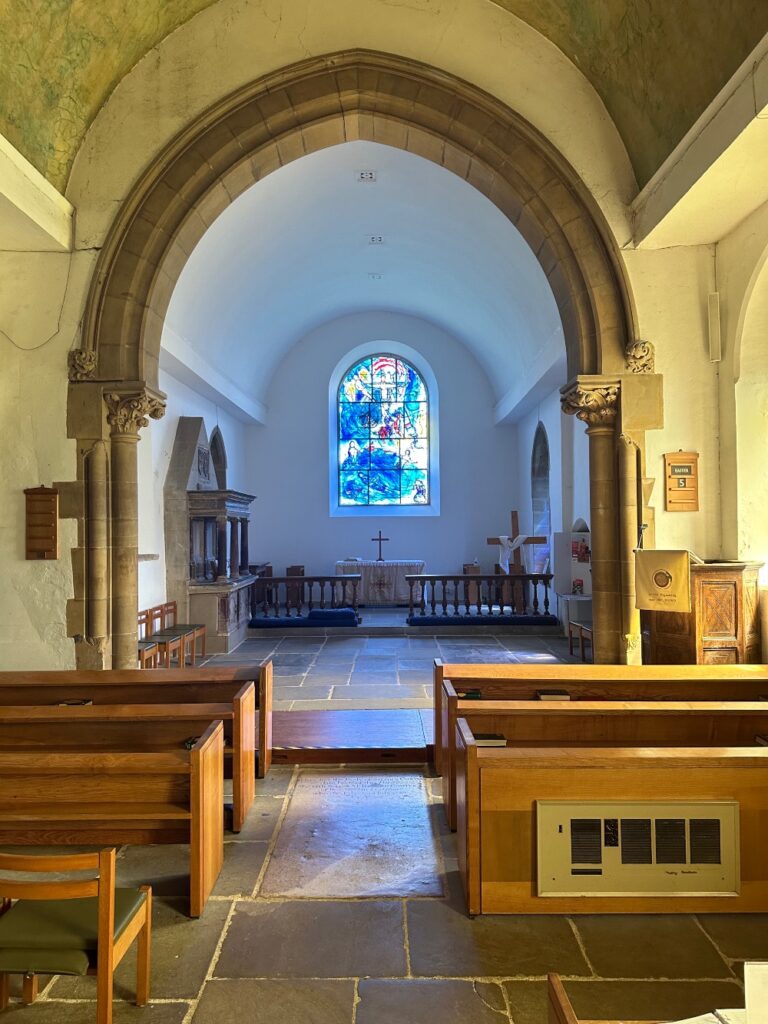
All Saints’ Church, Tudeley
All Saints’ Church, Tudeley, Tonbridge TN11 0NZ.
Tudeley has had a church since the beginning of the Seventh Century – it was one of only four in the Weald at that time. The earliest parts of today’s church are the sandstone footings of the nave and tower, which date from before the Norman conquest. It is mentioned in the Domesday Book under Tivedale – one of its many name variants.
A list of incumbents hanging in the church begins in 1251, but most of the structure that can be seen today is from the 18th century. The brick tower dates from around 1765, as does the delicately marbled ceiling; the North aisle was added in 1871.
Chagall’s Windows
All Saints’ Tudeley is the only church in the world to have all its twelve windows decorated by the great Russian artist Marc Chagall.
The east window at Tudeley is a memorial tribute to Sarah d’Avigdor-Goldsmid who died aged just 21 in a sailing accident off Rye in 1963.
Chagall was initially reluctant to take on the commission, but was eventually persuaded – and when in 1967 he arrived for the installation of the east window and saw the church, he said, ‘It’s magnificent. I will do them all.’ Over the next 15 years, Chagall designed all the remaining 11 windows, collaborating as usual with glassworker Charles Marq of Reims. The chancel windows were finally installed in 1985, the year of Chagall’s death at the age of 98 (replacing Victorian glass, now cunningly backlit by a specially designed lightbox installed in the vestry, at the suggestion of Sir Hugh Casson).
Website
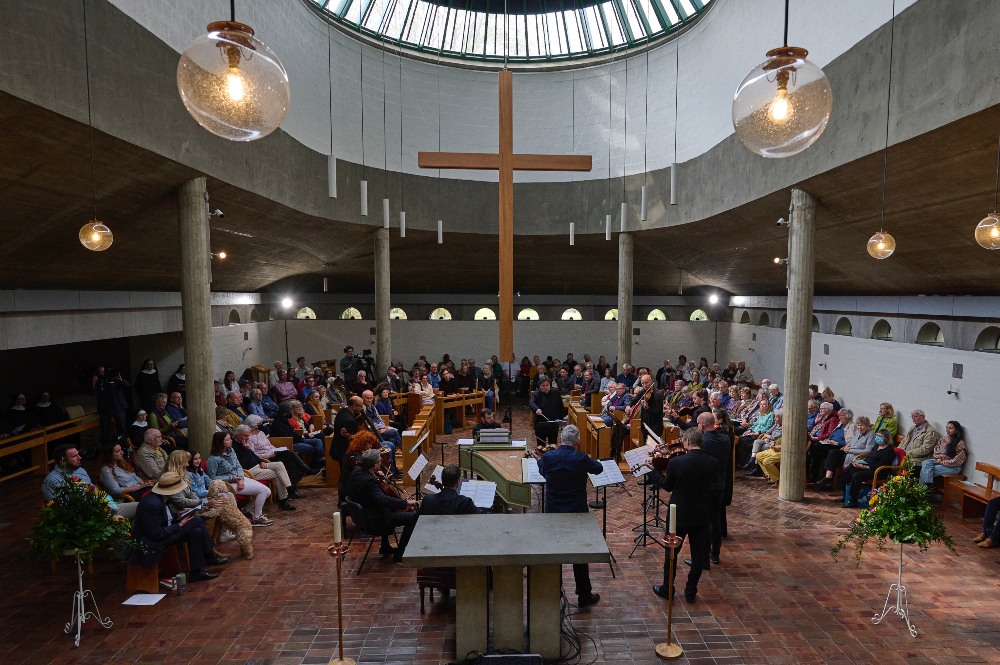
Chamber Domaine perform the complete Brandenburg Concertos alongside six new works in the iconic setting of Malling Abbey.
Each concert programme will include two of Bach's iconic Brandenburg Concertos and two World Premieres, the Abbey is home to a closed community of Benedictine Nuns.
Tom Bowles
Malling Abbey
52 Swan Street, West Malling, ME19 6JX
The histories of the Abbey and Town Malling have been closely entwined for more than 900 years.
In 1090, Gundulf, Bishop of Rochester, Monk of Bec Abbey in Normandy – and close ally of William the Conqueror – chose Malling as the site for a convent of Benedictine nuns. It was one of the first post-conquest monasteries for women and the estate was extensive as it included the Manor of Malling and the Manor of East Malling. Just before his death in 1108, Gundulf appointed the French nun, Avicia, as the first abbess.
Malling at the time was a small hamlet but it grew quickly as the Abbey flourished. By the 13th century “Little Malling” had become “TownMalling”. Royal grants gave the nuns rights to weekly markets at which they collected the rent from stalls and annual fairs as well as wood-cutting and pasturage rights in nearby forests. Malling High Street was designed specifically to accommodate these markets.
In the four and half centuries of Benedictine life at the Abbey, major events included a fire in 1190 which destroyed much of the abbey and the town. The Black Death in 1349 reduced the community to four nuns and four novices. Under Henry VIII, the Abbey was confiscated by the Crown on 29th October, 1538. The King’s agents stripped it of its valuables. They removed the lead roofs and bells and sent them to the foundry at the Tower of London to be made into cannon and shot for the war with France.
From 1538 to 1750, the Abbey was owned by a succession of families and the 11th century building fell into disrepair. In 1750, a London banker called Frazer Honeywood built a neo-Gothic mansion and repaired the surviving medieval fabric. A century later, the devout Akers family purchased the property. They restored the Pilgrim Chapel for public worship and later allowed the Gate House to be used as an orphanage.
In 1892, Charlotte Boyd bought the abbey and established the trust which restored it to its original use. And so the present community of Anglican Benedictine nuns was able to come to Malling Abbey in 1916. Fifty years later, the new Abbey Church was built and consecrated.
Architects Maguire and Murray had already designed a cloister and conventual building for the order when they were commissioned to produce an abbey church, made possible by a legacy from Marjorie Forbes Close, a leader in the revival of Anglican plainsong, in memory of her mother.
The abbey church (1964-6) is a remarkable modern intervention in the setting of great antiquity, providing an uncompromising yet sympathetic contrast to the grade I medieval abbey. It is set on the site of the crossing of the original abbey church and joined to the surviving transept via the new cloister.
Structurally it is built with concrete block walls, incorporating reinforced concrete ring beams at the top of the walls and drum. Reinforced concrete slab lower roofs are internally board-marked, and clad in pantiles; timber upper roof stained green and blue is tile-clad. The rectangular church space under cylindrical upper drum was likened by Maguire to a `double oast-house’. The movement from rectangular to cigar-shaped space was more dramatic before an engineering miscalculation forced the later installation of columns to support the upper roof.

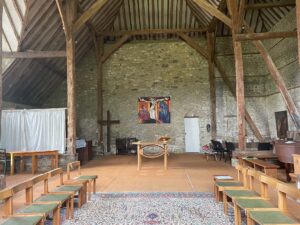
Pilsdon Barn
27 Water Lane, West Malling, ME19 6HH
For centuries this ancient timber and stone building has stood within the precinct of West Malling Abbey. It has been witness to tumultuous times of upheaval and treason. Our own century has not been uneventful and yet the building known locally as the Tithe Barn survives intact.
In 1066 William of Normandy acquired the throne by conquest. He appointed the famous architect Gundulf as Bishop of Rochester. Work on building St Mary’s abbey, St Leonard’s Tower and a small building nearby started in West Malling. By 1080 it is thought work was complete and the First Abbess named Avicia was appointed. The abbey prospered despite plague and fire: it became one of the wealthiest in England owning many premises in the growing town.
Between 1536 and 1541 King Henry VIII dissolved the monasteries confiscating their wealth. The nuns of Malling resisted bravely to the last. After various tenancies Queen Elizabeth I awarded Malling Abbey and lands to the Brooke family of Cobham. In 1603, English Courtiers plotted to depose King James I: the Brookes were ringleaders with Sir Walter Rayleigh. Sir George Brooke was executed and his brother Lord Cobham imprisoned in the Tower of London as was Sir Walter Rayleigh. Malling Abbey was confiscated and granted to the Brett family by James I. On the extinction of the Brett Family the Abbey and lands were granted to Sir John Rayney and the grant was later confirmed by King Charles II.
In the 19th Century, The Abbey came again into ecclesiastical hands and re-established as an abbey and monastery. Nowadays, the Tithe barn is home to the Pilsdon community and their fine work.
